Do Works
Exhibition, Melbourne Design Week, Naarm
2024

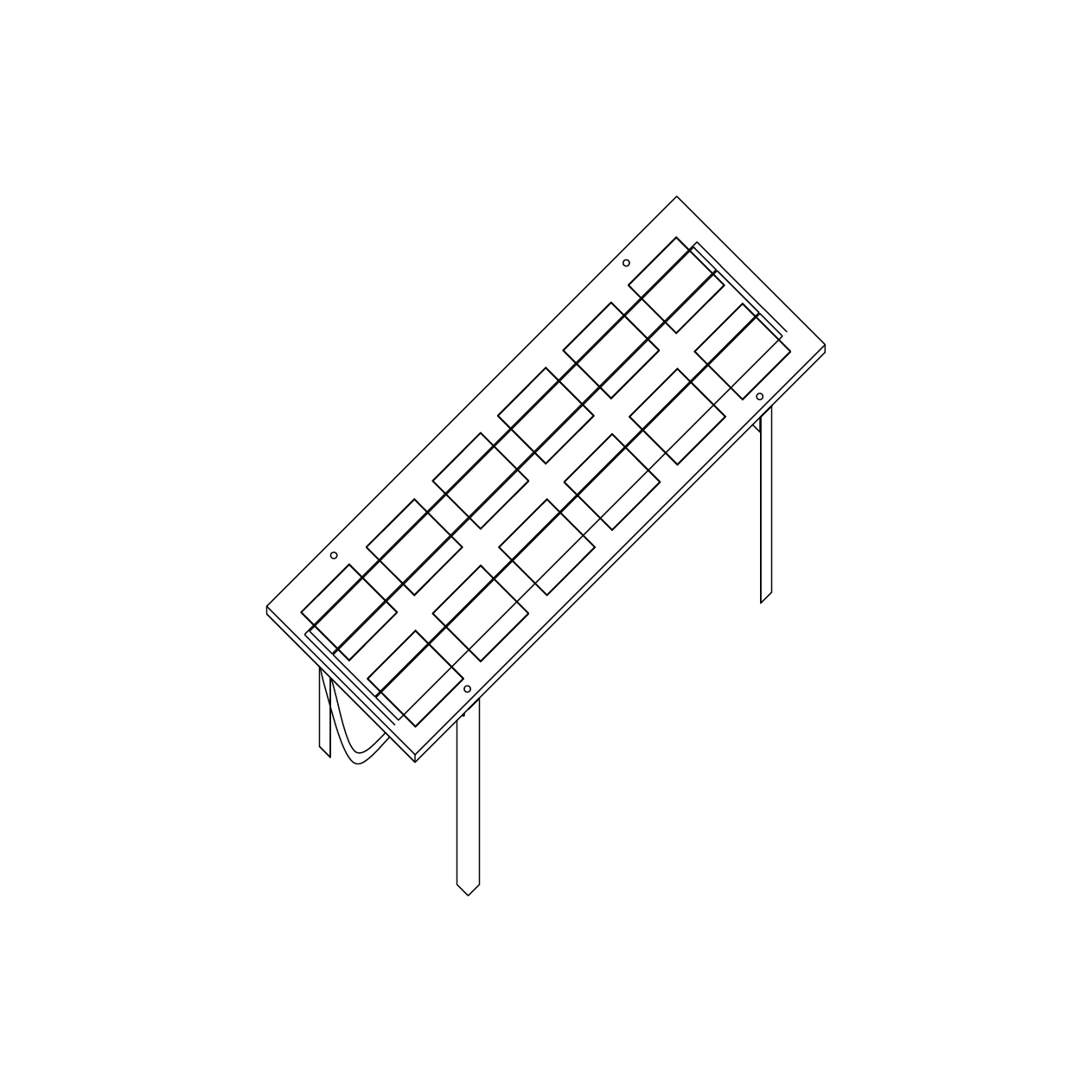
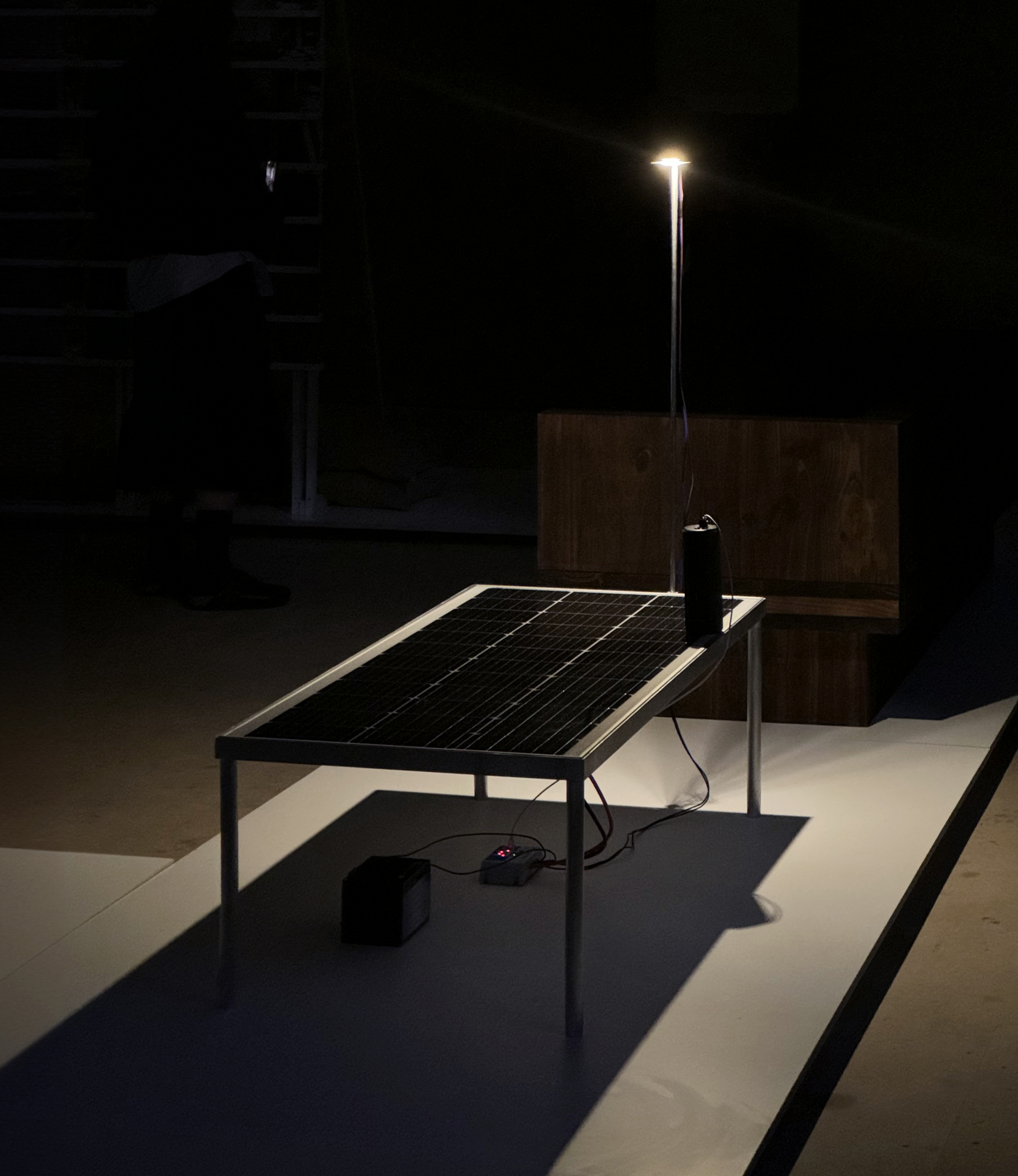
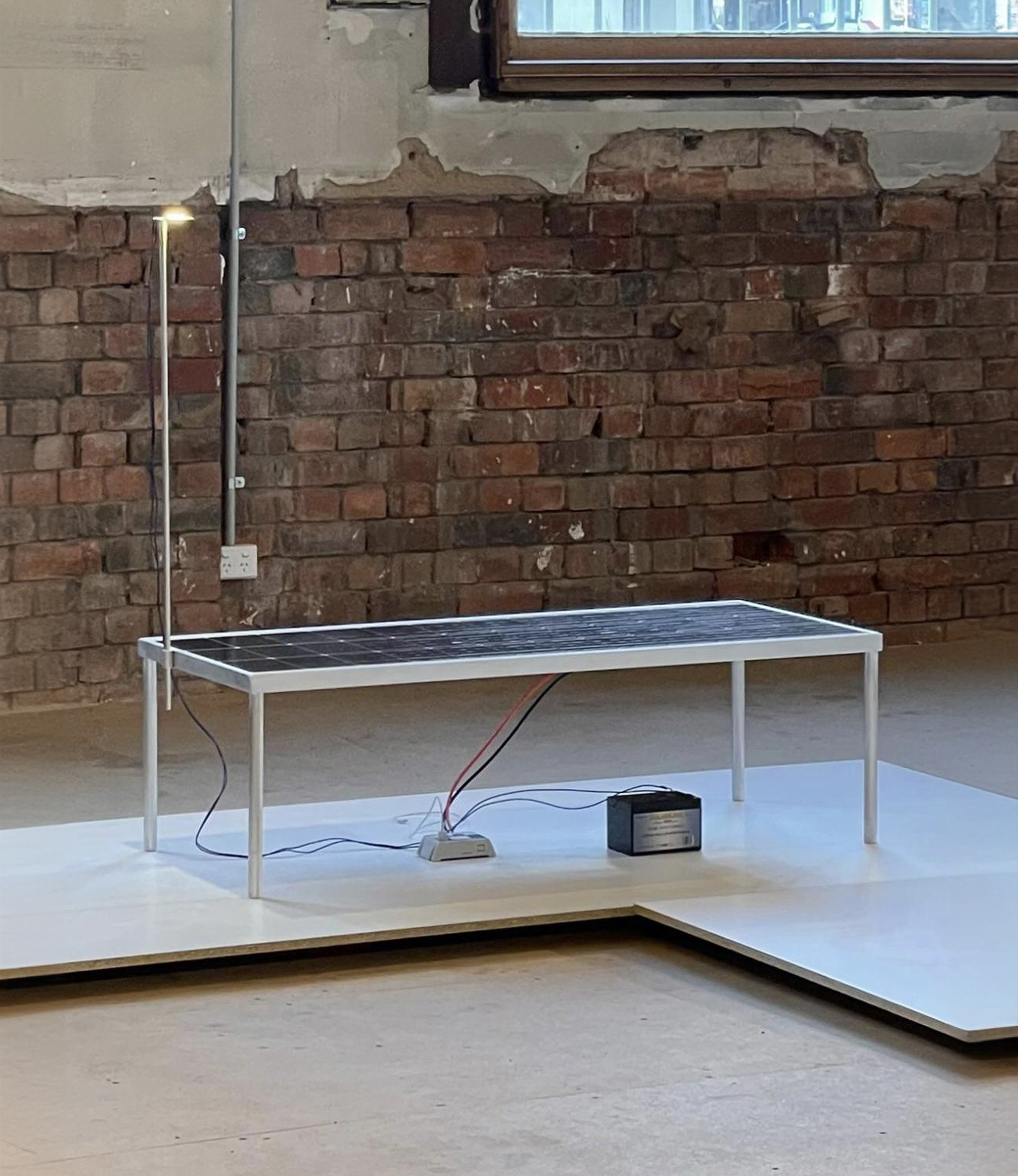
Our contribution to ‘Do Works’ was a table developed as a prototype for our ongoing ‘Energy Objects’ series. The project treats energy not as a background utility, but as a material condition, something that can be staged, handled, and made explicit through an everyday object. It reads as a modest coffee table; in use, it operates as a small energy system: solar capture, storage, and output, arranged as a USB charging hub and reading light.
The prototype is framed as a demonstration of exchange. It sits between production and consumption. Here, the interface is deliberately in the form of an ordinary piece of furniture. The intent is not to aestheticise technology, but to normalise the presence of energy as a legible, designable regime within daily life.
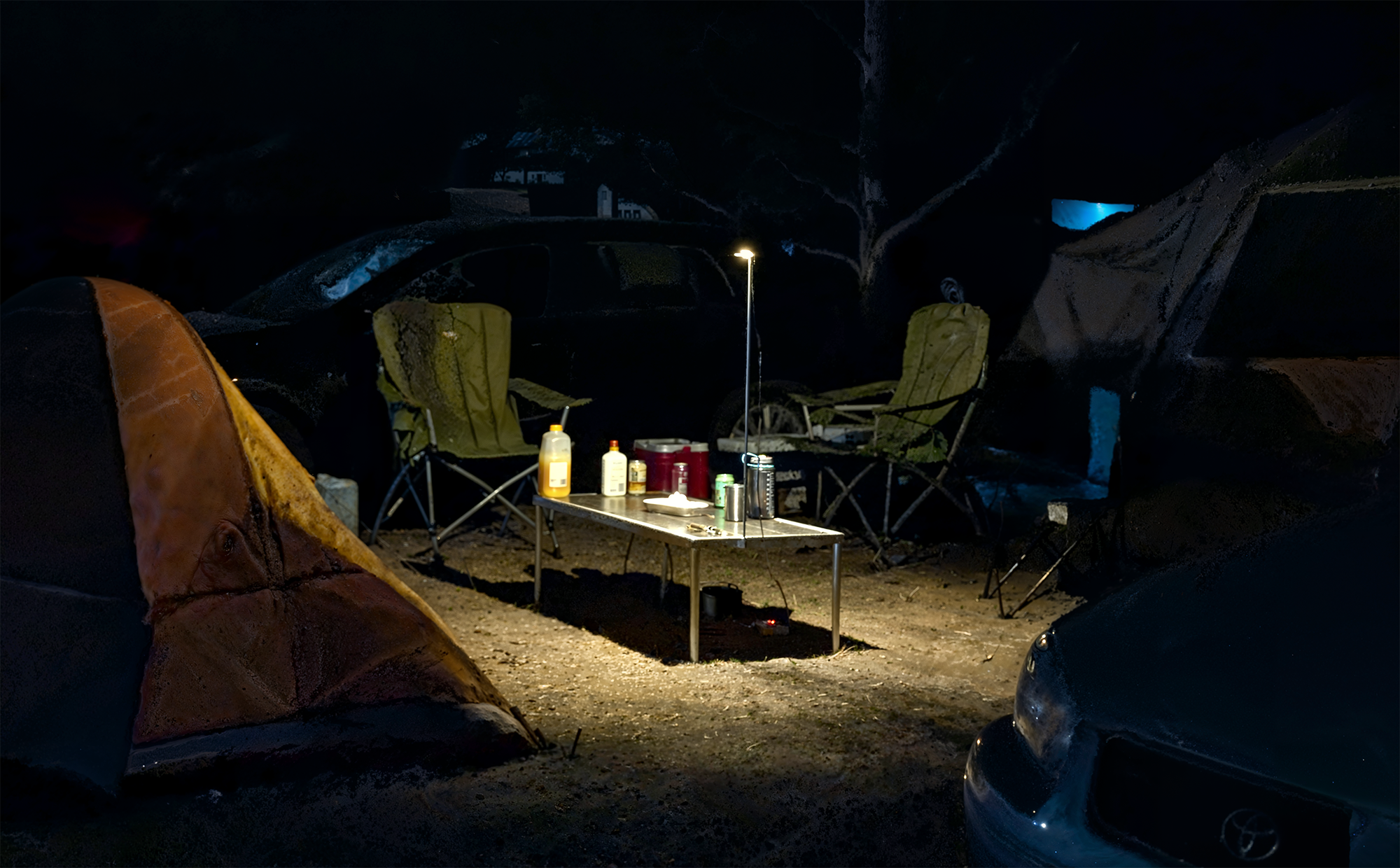
During the exhibition, the table was positioned in front of a south-facing window. Despite this constraint, enough indirect light entered the space between 1:30 and 3:00 pm to charge the unit. Later, when the power went out, the stored energy was sufficient for the table to operate as a light and charging point, including powering a wireless speaker for the afterparty. After the exhibition, the prototype was taken into the field and used as a camping table: a working surface during the day, then a light source at night. In that setting, the project shifts to a for of equipment, testing the same logic under different conditions and reinforcing the premise of the series: energy can be carried, shared, and made usable through simple, well-placed objects.
The prototype is framed as a demonstration of exchange. It sits between production and consumption. Here, the interface is deliberately in the form of an ordinary piece of furniture. The intent is not to aestheticise technology, but to normalise the presence of energy as a legible, designable regime within daily life.
During the exhibition, the table was positioned in front of a south-facing window. Despite this constraint, enough indirect light entered the space between 1:30 and 3:00 pm to charge the unit. Later, when the power went out, the stored energy was sufficient for the table to operate as a light and charging point, including powering a wireless speaker for the afterparty. After the exhibition, the prototype was taken into the field and used as a camping table: a working surface during the day, then a light source at night. In that setting, the project shifts to a for of equipment, testing the same logic under different conditions and reinforcing the premise of the series: energy can be carried, shared, and made usable through simple, well-placed objects.